


How to Choose a High-Speed Remote Camera Head for Live Sports Broadcast and OB Vans
Quick answer: Match the remote head’s speed, payload, footprint and controls to each sports camera position. For fast, mobile coverage with camera packages up to 20kg, a compact head such as the Mo-Sys L20 delivers up to 360° per second pan and tilt speed in a head weighing under 6kg, reducing setup time and saving space on the OB.
Live sport gives camera teams one chance. A breakaway goal, a photo finish or a car snapping into a hairpin will not be repeated for the cameras, so the remote head carrying the camera has to be ready, fast and reliable the moment the action starts.
At the same time, OB trucks are getting leaner. Facilities companies are building more versatile units, moving crew off site and scrutinising every flight case, rigging position and minute of setup. The question is no longer “which head has the biggest numbers on the data sheet?” but “which head delivers the most usable shots per kilo, per square metre and per operator?”
Why does remote head choice matter so much in live sport?
Live sports production is being reshaped by remote and REMI workflows. The Broadcast Bridge’s 2025 series on live sports production describes NEP REMI trucks carrying two replay systems where a full unit might carry eight or ten, and NEP UK’s Neo trailer combining the production unit and tender into one vehicle.
Leaner trucks put pressure on every piece of acquisition kit. A remote head that needs two people to rig, a dedicated storage bay and a long calibration routine erodes the efficiency a modern OB is designed to deliver. Meanwhile, audiences expect faster, more dynamic camera work, particularly in motorsport, athletics, skiing and court sports.
What criteria should you use to choose a remote camera head?
1. Speed: can the head keep up with the action?
Maximum pan speed is one of the most overlooked figures on a remote head data sheet, and one of the most decisive in live sport. Studio robotic heads are commonly rated at around 60° per second: Shotoku’s TG-18i and TG-19, for example, both list 60° per second as their maximum. That is ample for studio moves, but limiting for fast sport.
Consider a car travelling in a straight line at 300km/h (83.3 metres per second), passing 20 metres from the camera at its closest point. Angular speed equals linear speed divided by passing distance, so holding the car centred at closest approach requires roughly 239° per second. A head limited to 60° per second can only hold that car once it is around 80 metres away. A head rated at 360° per second clears the requirement with headroom to spare.
Top speed is only part of the story. Whip pans, reaction shots and back-panning to compensate for crane or jib movement also demand:
- Controlled acceleration: smooth starts and stops at high speed
- Backlash-free reversal: clean direction changes at the end of a whip pan
- Fine slow-speed control: gentle drifts for podium and crowd shots
2. Payload: match the head to your real camera package
Payload capacity must cover the complete working camera package: camera body, lens, lens motors, power and any tracking hardware. Over-specifying adds weight, mounting requirements and cost; under-specifying rules out the camera and lens your production needs.
Mo-Sys designs its compact sports head around 20kg because, as SVG Europe reported at IBC2025, that covers “the most popular high-end camera packages”. Specify for the package you fly, with sensible headroom and correct balance, rather than for a worst case that never leaves the truck.
3. Footprint and weight: every kilo travels
On an OB, the head’s own weight affects support loading, case space and mounting options. A small, light head fits positions a larger unit cannot, from compact jibs and sliders to confined gantries and car interiors, and is far simpler to handle, for rig and de-rig.
4. Setup and operability: how fast can you go live?
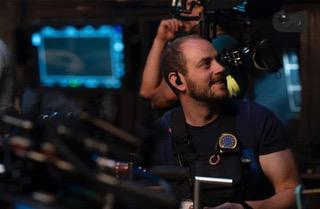
The best head on paper is no use if it is still being configured when the event starts. Prioritise heads with simple cabling, minimal calibration and controls operators already know, such as pan bars, hand wheels or a broadcast console. As key grip Josh Close puts it in a Mo-Sys interview: “With our game it’s all about how quick you can get something set up.”
5. Integration: encoding, connectivity and AR
An encoded remote head provides pan and tilt data for augmented reality (AR) graphics, including virtual advertising and live overlays. If the camera itself moves on a jib, crane or rail, pan and tilt data is not full six-axis tracking, so positional tracking such as Mo-Sys StarTracker Max may also be needed. Check, too, whether the head can be operated from the truck over cable, radio or fibre.
Where do larger, heavy-payload remote heads fit?
Larger remote heads are designed around a different priority: carrying as much camera as possible. Shotoku’s TG-18i is rated for payloads of up to 62kg and its TG-19 for up to 70kg, enough for full-size studio cameras with large lenses and prompters. Both are built for studio robotics, with the TG-18i designed to work alongside robotic pedestals and elevators.
That capacity comes at a cost on an OB:
- Speed: Both heads are rated at a maximum of 60° per second. That suits controlled studio moves, but sits well below what close trackside coverage and whip pans demand.
- Space: Heads built for 60–70kg payloads and pedestal-based studio robotics need heavier-duty mounts and support, so each position takes more room in the truck and more time to rig.
For large studio packages, that capacity is essential. For mobile sports positions using packages within 20kg, it means carrying size, weight and speed limits the shot never needed.
Why do speed and low weight matter together?
In live sport, speed and weight are two sides of the same requirement, and the real value comes from getting both in one head.
1. Lower mass, faster response
For a given motor torque, lower rotational inertia means faster acceleration and crisper stops. A lighter head puts more of its drive into moving the camera rather than itself, which is what makes high speeds usable on air rather than just impressive on paper.
2. A lighter head lightens the whole rig
The weight of the head is carried by everything beneath it, and on a jib or crane that weight is multiplied by leverage. Josh Close, who has run both the Mo-Sys L20 and the larger 18kg L40 on jib arms, describes the difference:
“When I swing the jib arm around at full length, there’s a twelve-kilo difference between the two heads… you’re looking at an extra forty or fifty kilos, just to counterbalance… you really feel it when you put the L20 on.”— Josh Close, Key Grip
Less head weight means less counterweight, lighter support and simpler rigging at height. Across a production, that means fewer heavy cases, faster load-ins and more positions rigged per day.
3. Speed without weight creates new shots
When a fast head is also small, it can go where the fastest action is: trackside, pitchside, inside a vehicle, on a mountainside or at the end of a crane arm. Positions that were once locked-off safety shots become dynamic, operated cameras that can follow the action, whip to a reaction and back again.
Why is a compact 20kg head the sweet spot for live sport?
Live sport needs real payload and real speed, in a package that travels. That is the brief the Mo-Sys L20 was built around. Mo-Sys describes it as the smallest two-axis remote head for camera packages up to 20kg. Its patented JamDrive motors, which combine the torque of a geared drive with direct-drive speed, deliver up to 360° per second: six times the maximum of studio heads such as the TG-18i and TG-19.
| Mo-Sys L20 specification | Value |
|---|---|
| Pan and tilt speed | Up to 360°/s |
| Maximum payload | 20kg |
| Head weight | Under 6kg |
| Pan and tilt range | ±3 revolutions (limited by cable twist) |
| Control | Pan bar, hand wheels or broadcast console |
| Encoding | Pan and tilt as standard; lens encoding optional |
| Control range | 100m bus; 300m with radio; up to 20km with fibre |
| Power | 12–30V DC (24V nominal) |
Source: Mo-Sys L20 product page, October 2026.
For OB teams, that translates into practical advantages:
- Speed for the hardest shots: Up to 360° per second covers fast tracking and whip pans, and optional back-pan capability compensates for crane movement to keep framing steady.
- Minimal space on the truck: A compact, all-metal head weighing under 6kg packs into a small case and rigs in confined positions.
- Fast setup, familiar control: Operators are on air quickly with controls they already know. Close notes he can swap heads on the same arm: “I can put the L20 on, plug in, and it works straight away.”
- Quiet running: Low-noise brushless motors are designed for sound-sensitive environments.
The L20 in action: RTS at the Alpine Ski World Cup
Swiss broadcaster RTS tested the L20 at the 2026 FIS Alpine Ski World Cup in Crans-Montana. TV director Aurélien Vallotton said the head let the team operate “remotely in locations that would otherwise be inaccessible” while delivering “the extremely fast movements required to capture the true speed and intensity of the skiers”. Operator Louis Coubés learned the settings in about an hour, said “you quickly get the hang of it”, and would “do it without hesitation tomorrow”. (Mo-Sys: RTS L20 test)
Which remote head suits which production requirement?
| Production requirement | Best-fit solution | What to verify |
|---|---|---|
| Fast tracking; package within 20kg | Compact high-speed head such as the L20 | Acceleration, balance and mounting |
| Package over 20kg; large lens or prompter | Higher-payload studio head | Capacity, dimensions and support loading |
| Vehicle motion or vibration | Stabilised head or stabilised support | Required axes with the intended rig |
| Moving camera with world-locked AR | Encoded head plus positional tracking | Lens data, calibration and integration |
| Integrated camera preferred | PTZ system | Image quality, lens and controls |
Yes. An encoded remote head provides pan and tilt data for AR graphics. The Mo-Sys L20 is encoded as standard, with optional lens encoding. If the camera also moves on a jib, crane or rail, add positional tracking for full six-axis data.
Work it out from subject speed and camera distance. A car at 300km/h passing 20 metres from the camera needs about 239° per second at closest approach. Studio heads rated at 60° per second fall well short; a 360° per second head clears it with headroom for acceleration and back-panning.
For fast, mobile sports coverage with camera packages up to 20kg, the Mo-Sys L20 is a leading choice: it delivers up to 360° per second pan and tilt speed in a head weighing under 6kg. Fixed positions with heavier lenses and prompters suit higher-payload studio heads.
A PTZ camera integrates the camera, lens and motorised head in one unit. A remote head carries a separate camera and lens of your choice, so productions can fly broadcast or cinema cameras with interchangeable glass and match the imaging package to the shot.
Weigh the complete package, including camera, lens, lens motors, power and tracking hardware, and choose a rating that covers it with balanced headroom. A 20kg rating covers the most popular high-end camera packages, making a 20kg compact head the most versatile choice for mobile OB positions.
Head weight is multiplied by the jib’s leverage. Key grip Josh Close found that a twelve-kilo difference between two heads meant an extra forty or fifty kilos of counterweight on his rig at full extension, so a lighter head makes the whole rig lighter and easier to handle.